|
|
In viewing the video dedicated to the art of Dogon society, I would like you to consider the following issues:
|
|
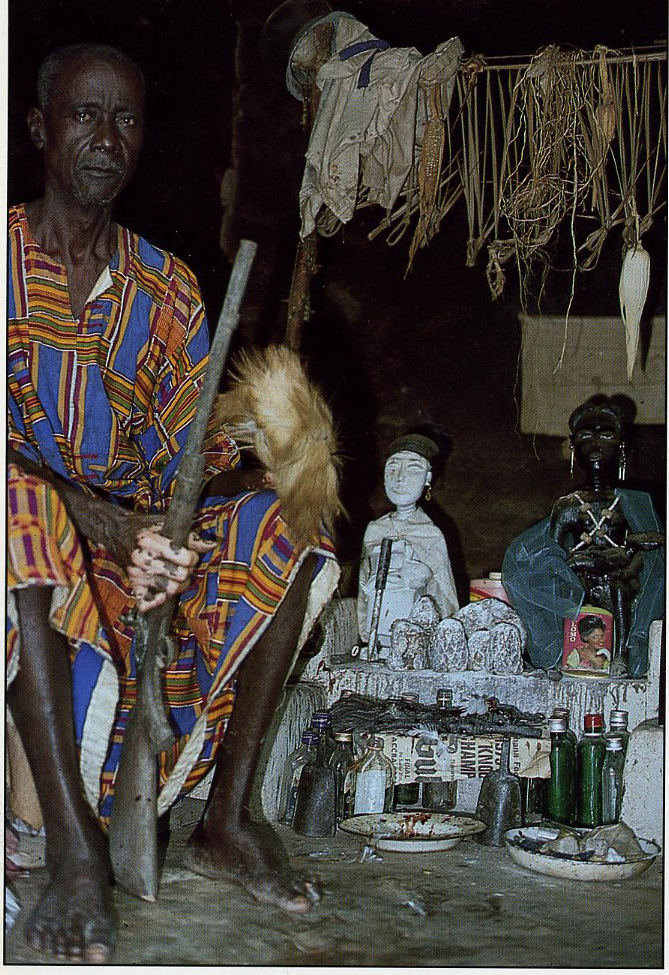
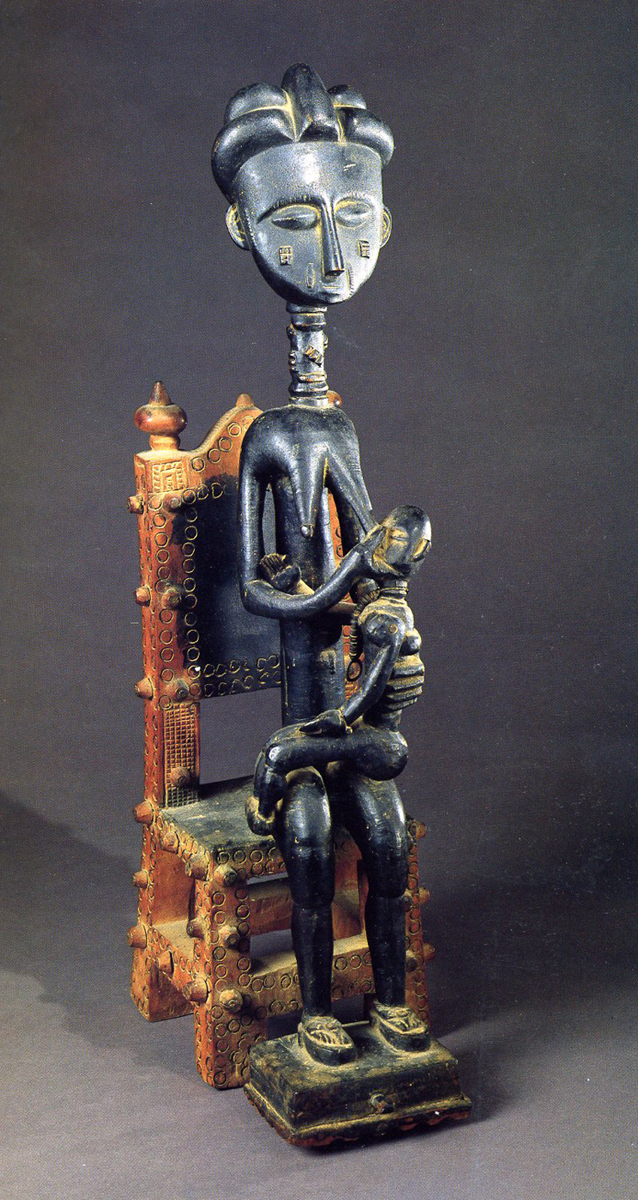
1) The video shows Dogon art in two radically different contexts. There are clips of an exhibition in Texas dedicated to their art, and then the video attempts to place the objects in the context of their actual use in Dogon society. The photographs above illustrate these two different contexts as well. An issue we need to keep in mind is not just understanding the social context of the production of the work of art, but how it is "consumed" or experienced in the different cultural contexts. On the basis of this contrast articulate the different roles of art in Dogon society and the modern museum.
2) At various points in the video connections are made to art in the western world: comparisons are made between African tribal traditions and "Primitivism" in Modern art. Consider our modern idea of "Primitivism" in relationship to the art of the Dogon. Is it a useful term to be applied?
| Sally Price, Primitive Art in Civilized Places, p. 5: In part, this book is about the plight of objects from around the world that --in some ways like the Africans who were captured and transported to unknown lands during the slave trade-- have been discovered, seized, commoditized, stripped of their social ties, redefined in new settings, and reconceptualized to fit into the economic, cultural, political, and ideological needs of people from distant societies. Although the devastation wrought by this twentieth-century brand of cultural imperialism is of an entirely different order from that of its slave trade precedent, it, too, diminishes the communities that are its suppliers. To understand this phenomenon, we must begin by focusing our attention, not on the art objects themselves, nor on the people who made them, but rather on those who have defined, developed, and defended, and defended the internationalization of Primitive Art, and other racial, cultural, political, and economic visions. |
3) One of the values of the video is that it attempts to put the production and consumption of objects in social, religious, and educational practices. Try to articulate the connections. Most specifically consider the role and place of the "blacksmith" in Dogon society. What is his connection to other parts of the society? The video shows the carving of a mask, and there is a dialogue with the maker about his intentions. Articulate these.
4) There is an interesting scene of a sacrifice. Try to articulate the significance of the ritual. Consider here gender roles.
5) The video shows the production of onions by women consider the relationship of this activity in relationship to the structure of Dogon society as a whole.
6) Understand that Dogon society is a non-literate society. On the basis of the video consider the role the images play in transmitting wisdom. This is a point that is made is Susan Vogel's book:
| In societies without writing, art objects can acquire extraordinary importance as visual records. On a simple level, the possession of a particular object --a crown, for example-- can prove the legitimacy of succession. The right to sacrifice to a particular ancestor can carry with it the inherited right to farm certain land. On a deeper level, works of art are endowed with complex meaning and serve as respositories of traditional knowledge. They are dense concentrations of ancestral wisdom that must be preserved and transmitted to succeeding generations. Thus art often plays an important role in rites of initiation. Sculptures are used to teach moral principles to initiates. Multiple layers of meaning embodied in sculpture are progressively revealed to initiates so that only the oldest and most advanced members fully understand their significance.... |
Write your responses to these issues in your journals. These will be the basis of class discussion on Thursday, September 1.
For Tuesday, September 6, take one of these topics and develop a short paper (2-3 pages in length). Bring this paper to class to workshop.
Thursday, September 8, submit your revision of your short paper.
Excerpts from Susan Vogel, For Spirits and Kings, African Art