Art Home | ARTH Courses | ARTH 200 Assignments
First Paper Assignment:
Greek Art and the Construction of Gender
A central tenet of feminist and critical theory is that gender is a social construction rather than a biological fact. In culture, biological sexes are redefined, represented, and channeled into different roles. What appears to be natural is a product of the gender roles articulated within culture. This perspective is critical to how we look at images of gender in other cultures. Representations of gender, rather than reflecting, serve to construct, legitimize, and appear to make natural an order of relations of domination and subordination.
This theoretical point of view is critical in an examination of the construction of gender in Greek culture. As was observed in the webpage Greeks and the Other, Greek culture defined itself by drawing contrasts. Greek culture's essential patriarchal nature can be seen in the representations of gender. For your first paper I want you to examine a work or a comparison of works of Greek art from this theoretical point of view.
The works below are potential topics for your paper. You could pick any of these, and write a successful paper. You could also do a comparison of two of these works. If you do a comparison make sure that the paper does not end up being two short papers. It is critical that your paper focus on the comparison noting the similarities and differences and bringing out the significance of these. You do not need to feel limited to these works, but if you want to develop a paper around other images, you need to e-mail me and get my approval. I do want your works to come from Ancient Greek art.
There are 3 stages in writing this paper. By Thursday, March 3, you should e-mail your idea for your paper and get my approval. Thursday, March 10, you will bring a draft of your paper to class, and we will workshop the drafts. The paper is due Tuesday, March 15. The paper should be 3-5 pages in length.
|
List
of Works that could be potential Topics for you Paper
|
|||
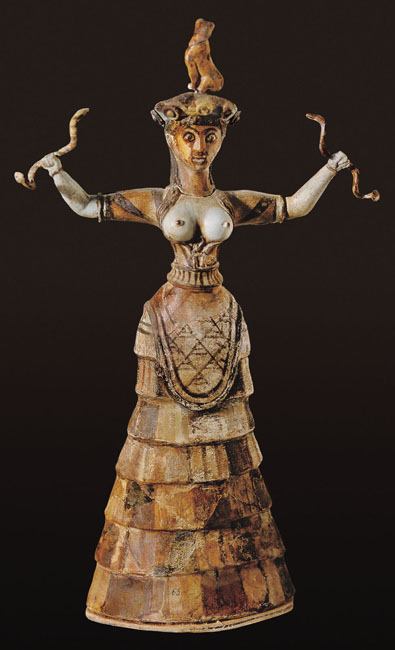 |
"Snake Goddess," from the palace of Knossos (Crete), Greece, c. 1600 B.C.E. (Minoan) | ||
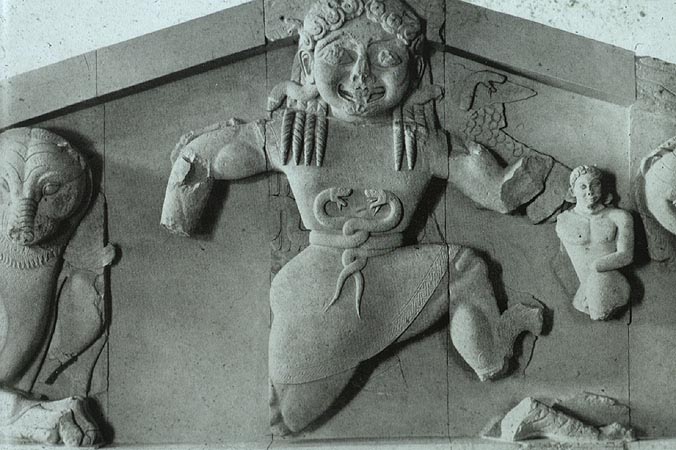 |
Medusa from the west pediment of the Temple of Artemis at Corfu, c. 600-580 B.C.E. (Early Archaic) | ||
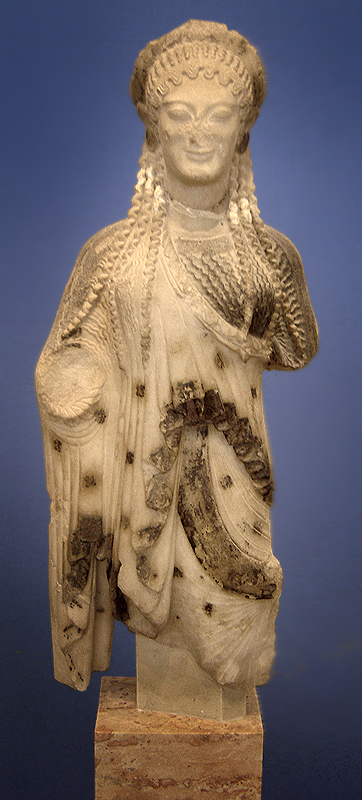 |
Kore from the Acropolis, Athens, Greece, ca. 510 B.C.E. (Late Archaic) | ||
 |
"Kroisos", Kouros from Anavysos, c. 530 B.C.E. (Late Archaic). | ||
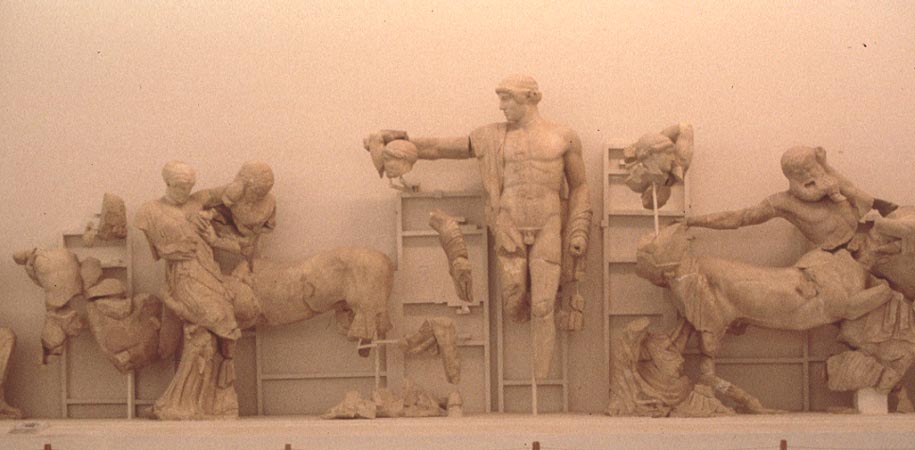 |
West Pediment with the Battle of Lapiths and Centaurs from the Temple of Zeus at Olympia, ca. 470-456 B.C.E. (Early Classical) | ||
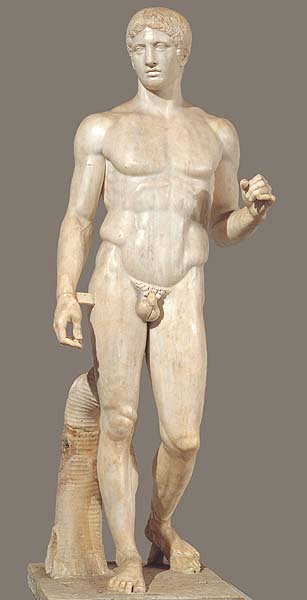 |
Polykleitos, Doryphoros, ca. 440 B.C.E. (Classical) | ||
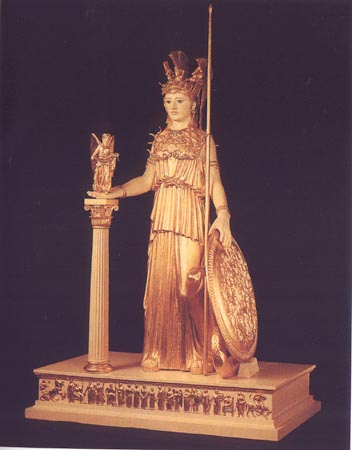 |
Modern Reconstruction of the statue of Athena Parthenos from the Parthenon, ca. 447-432 B.C.E. (Classical) | ||
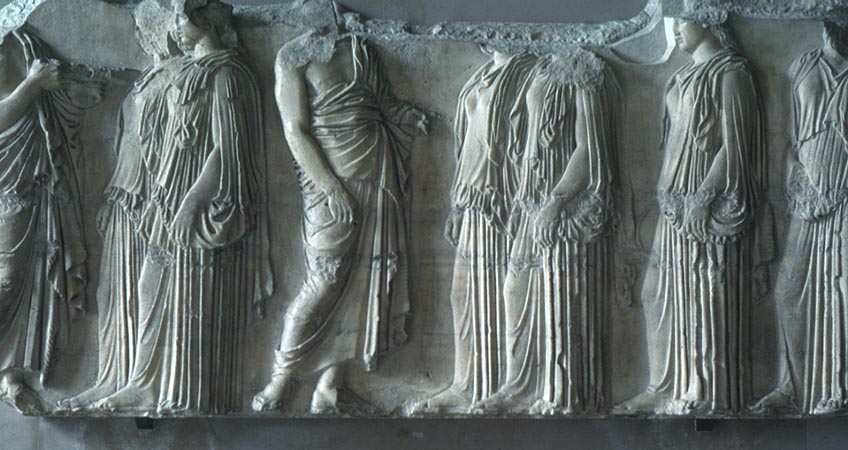 |
The Panathenaic Procession from Parthenon, ca. 447-432 B.C.E. (Classical). You could discuss the construction of gender in the frieze as a whole and not limited to this particular detail. | ||
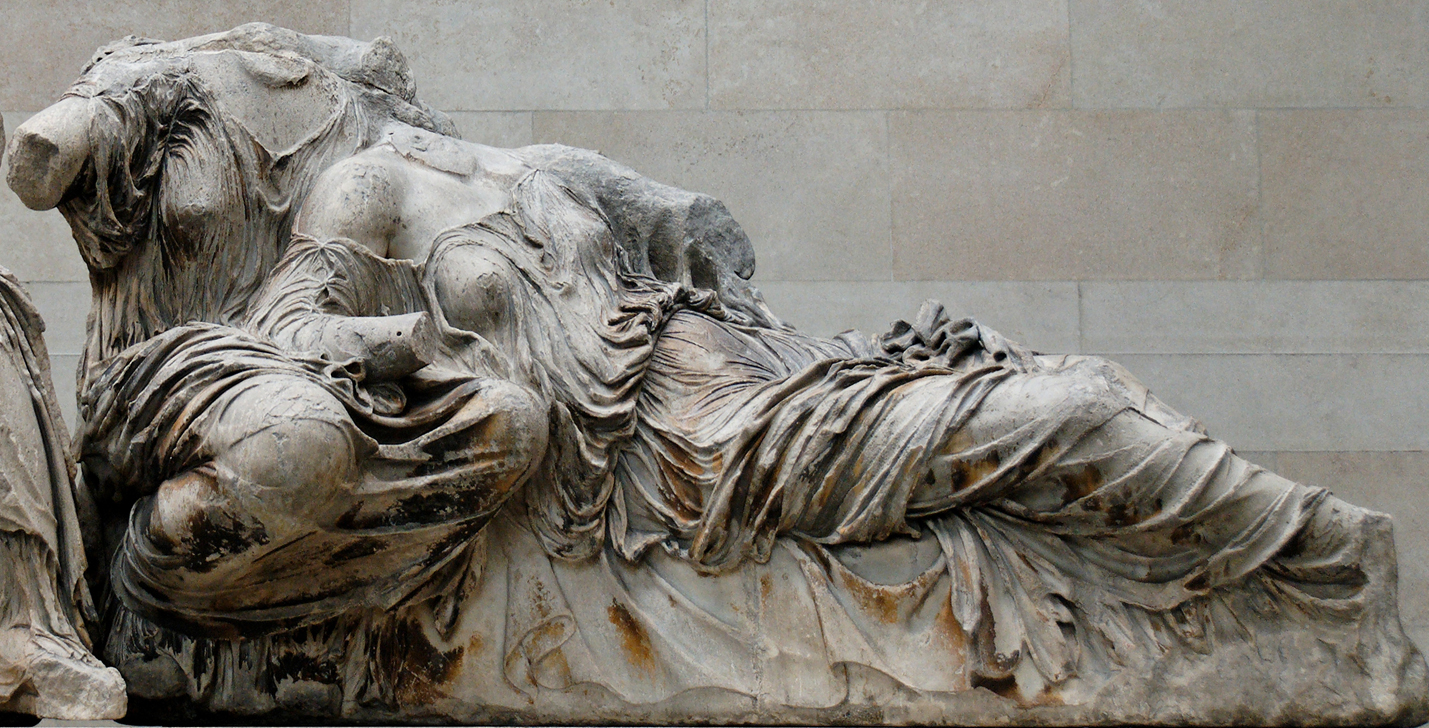 |
"Two Goddesses" from the east pediment of the Parthenon. ca. 447-432 B.C.E. The reclining figure is probably Aphrodite. (Classical) | ||
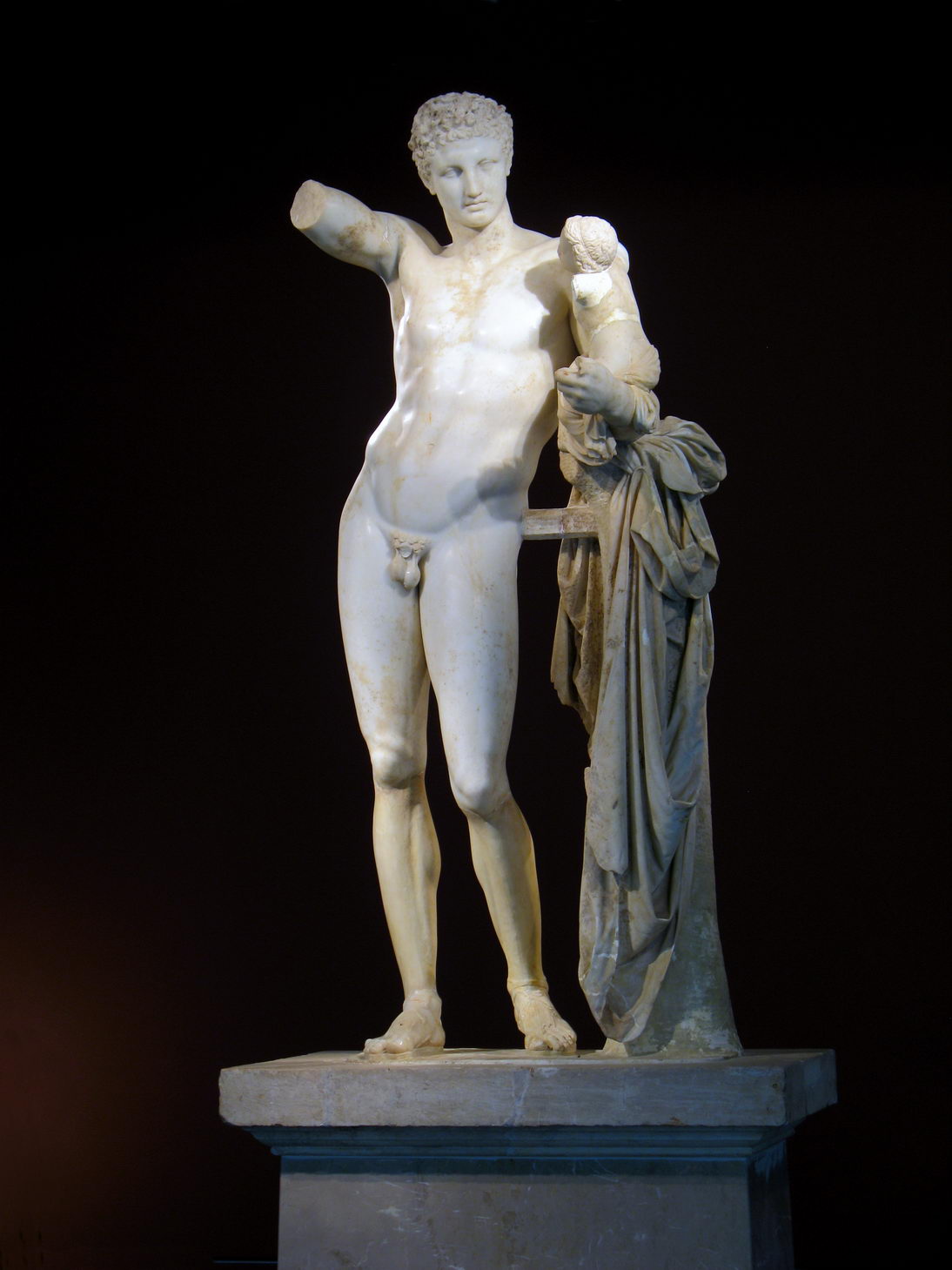 |
Praxiteles, Hermes with the Infant Dionysos, from the Temple of Hera at Olympia, possibly marble copy of original ca. 340 B.C.E. (Late Classical) | ||
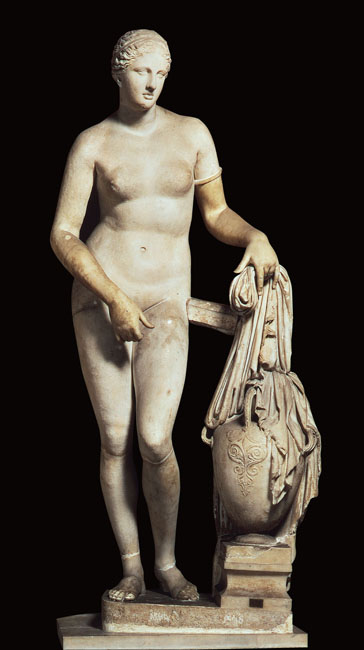 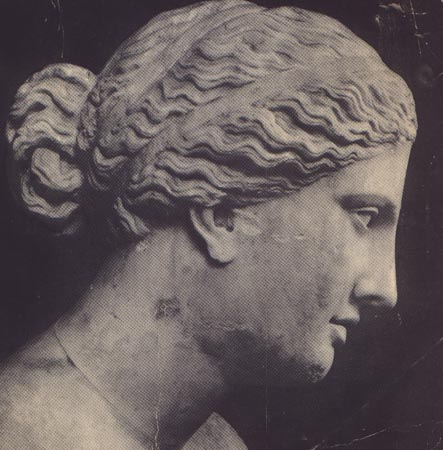 |
Praxiteles, Aphrodite of Knidos, Roman copy after an original of ca. 350-340 B.C.E. (Late Classical). | ||
|
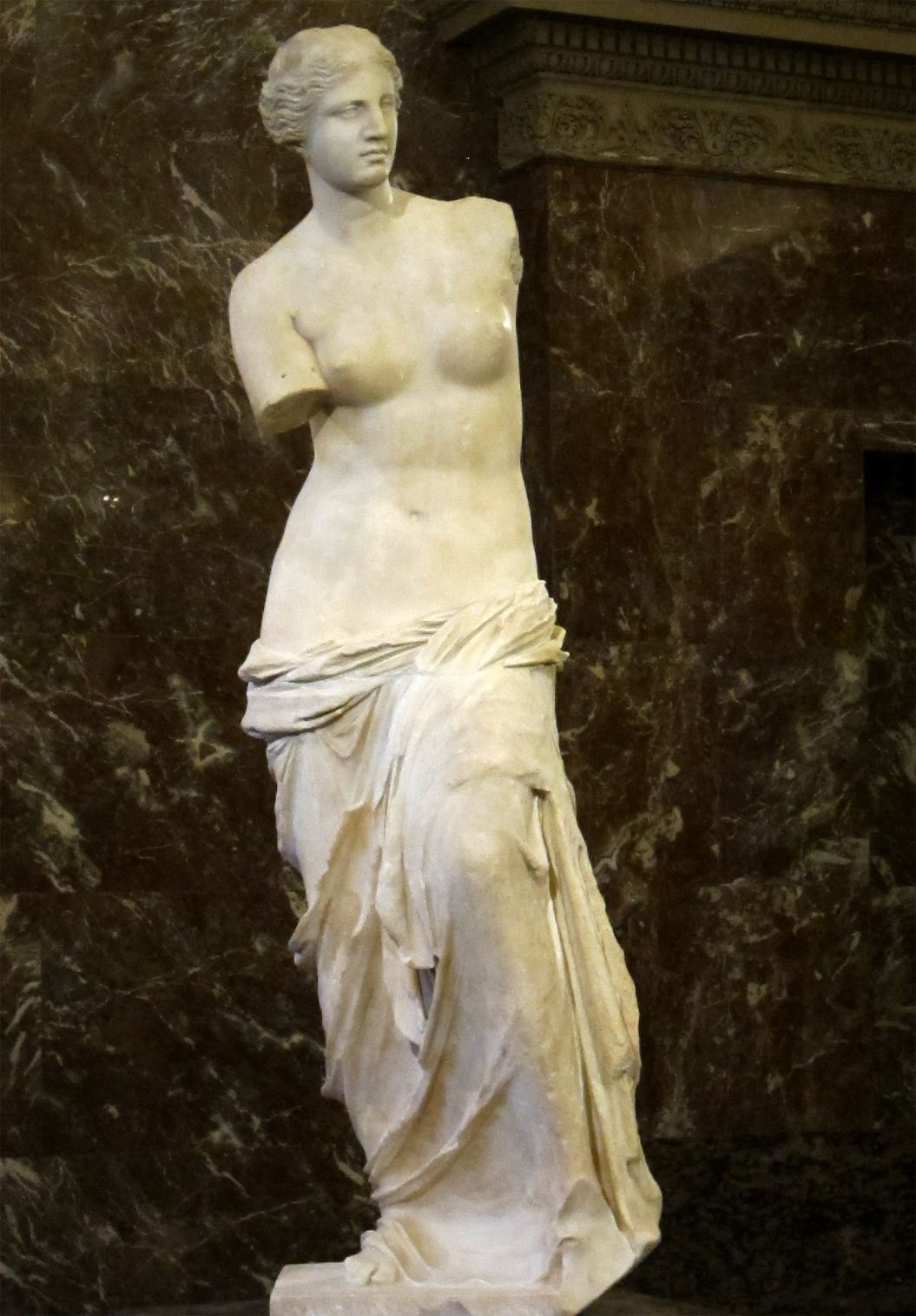
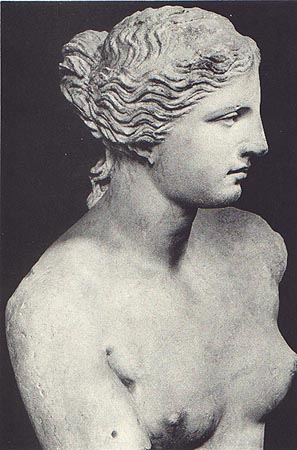
Aphrodite of Melos (Venus de Milo), from Melos, ca. 150-125 B.C.E. (Hellenistic) | ||